











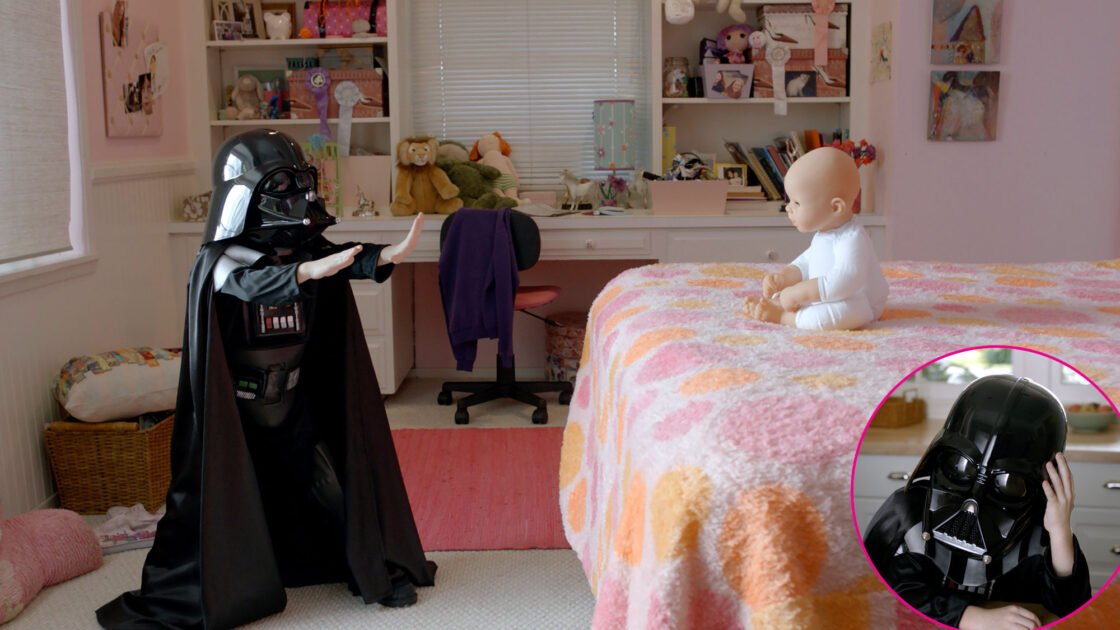

It has been years since a pint-sized Sith Lord hijacked the Super Bowl and changed the ruthless world of advertising forever, but the real story behind the mask is infinitely more shocking than the commercial itself. While the world was cooing over the adorable “The Force” spot from Volkswagen in , a terrifying medical drama was unfolding behind the scenes that the cameras didn’t show. We are peeling back the curtain on the most viral seconds in television history to reveal the chaos, the calculated leaks, and the life-or-death battle that plagued its child star.
What looked like a cute skit about a kid trying to use the Force on a washing machine was actually a high-stakes gamble by ad agency Deutsch and Volkswagen to save a dying brand. But as the executives were popping champagne over their genius marketing hack, the star of the show, Max Page, was facing a reality that would make a grown man crumble. This wasn’t just a commercial; it was a smokescreen for a heavy-hitting human interest tragedy that no one saw coming.
As we approach the anniversary of Super Bowl XLV, insiders are finally spilling the tea on how a “drab photocopy” of a child turned into a cultural phenomenon, and why the “cute kid” curse almost claimed another victim in the most brutal way possible.
The Marketing ‘Leak’ That Rigged the Game

Let’s cut through the PR fluff: Volkswagen didn’t just “release” an ad; they declared war on the NFL’s traditional ad model. Before , Super Bowl commercials were treated like state secrets, locked in a vault until kickoff. VW and their agency, Deutsch, decided to break the rules in a move that industry insiders called “reckless” and “game-changing.”
They leaked the footage early. It was a calculated strike designed to steal the spotlight before a single helmet clashed on the field. By uploading the spot to YouTube on the Wednesday before the game, they hijacked the news cycle. While other brands paid millions to premiere their spots during the game, VW had already racked up . million views in hours.
By the time the Green Bay Packers and Pittsburgh Steelers actually took the field, the ad had exploded to over million views. It was a masterclass in market manipulation. Critics at the time screamed that it would ruin the surprise, but the numbers didn’t lie. They forced every other company to rewrite their playbooks. The “surprise” of Super Bowl ads was dead, and VW was the one holding the smoking gun.
“I remember seeing it on Facebook days before the game. It felt like a leak. I thought someone was getting fired for uploading it early. Turns out, we were all just being played by the marketing machine.”
The Secret Medical Nightmare Behind the Mask

Here is the bombshell that really stops your heart. The energetic kid flailing his arms at the Passat wasn’t just acting—he was fighting a congenital defect that could have killed him. Max Page was born with Tetralogy of Fallot, a severe heart abnormality that is every parent’s worst nightmare. While the world laughed at his frustration with the baby doll and the sandwich, his family was living on a knife’s edge.
Sources confirm that just months after the commercial made him a global superstar, the young actor was rushed into surgery to have a pulmonary valve replaced. And that was just the beginning. This poor kid has gone under the knife more than times since his brush with viral fame. surgeries. Let that sink in.
Most child stars crash and burn due to drugs or bad behavior; Max was battling his own biology. The contrast between the powerful “Darth Vader” persona and the fragile reality of his condition is the kind of dark irony Hollywood usually scripts, but this was real life. He became the face of Children’s Hospital Los Angeles, turning his fame into a crusade for survival.
“We all thought he was just a cute actor. finding out he was having open heart surgeries while we were laughing at the commercial makes you feel gutted. The kid is a legit warrior.”
The ‘Drab’ Photo That Started It All
You would think a commercial of this magnitude had a billion-dollar casting process, right? Wrong. Kim Getty, the CEO of Deutsch, spilled the beans in a shocking exclusive, revealing that the entire concept hinged on a piece of trash found in a copy room. A creative team member spotted a “photocopy of a little kid in a Stormtrooper helmet” lying amidst a pile of rejected ideas.
It was a fluke. A literal accident. The concept was pulled from the garbage heap of bad ideas and polished into gold. They swapped the Stormtrooper for Vader, hired director Lance Acord, and paid the heavy licensing fee for John Williams’ “Imperial March.”
If that one employee hadn’t looked down at the floor in the copy room, Max Page would never have been cast, and VW would likely still be trying to figure out how to sell the Passat. It is proof that in this industry, dumb luck beats strategy every single time.
Did VW Save a Dead Franchise?

We need to talk about the state of Star Wars in . It was dead in the water. The prequel trilogy had ended in with a whimper, and The Force Awakens was still four years away. The franchise was in a “lull,” which is polite PR speak for “nobody cared anymore.” Then came this commercial.
Kim Getty makes a bold claim that the ad helped “grow a new generation of Star Wars fans.” Is it arrogant? Absolutely. Is it true? Maybe. The commercial tapped into a nostalgia vein so deep it practically forced parents to show their kids the original trilogy. VW didn’t just sell cars; they arguably rehabilitated the image of Darth Vader from a child-killing villain into a cute pop-culture mascot.
The ad was so impactful that Max Page got a face-to-face meeting with the voice of Vader himself, the late James Earl Jones. Jones, who passed away in September , reportedly loved the spot. When the Dark Lord approves, you know you have struck gold.
The Billions in Free Press
The financial fallout of this ad is staggering. By releasing it early and letting it go viral, VW secured millions of dollars in free airtime on news stations, talk shows, and blogs. The ad was viewed million times before the network even aired it during the Super Bowl broadcast. In today’s money, that kind of exposure is priceless.
“It was a seismic cultural event,” Getty bragged to reporters. Of course, they claim “no one set out to create a seismic cultural event,” but we are calling bluff on that. You don’t license the most famous movie score in history and hire a top-tier director unless you are planning to break the internet. This was a calculated domination of the airwaves, and it made the competition look like amateurs.
The industry nonprofit The One Club named it one of the top most influential ads of the past years. It is the gold standard that every desperate marketing exec has been trying to replicate ever since, failing miserably in the process.
Where Is Mini-Vader Now?

So, where is the kid who charmed the world? Max Page is now years old and attending Loyola Marymount University in California. He survived the surgeries, he survived the child star curse, and he survived the minutes of fame. He even had a stint on The Young and the Restless, playing Reed Hellstrom, proving he has actual acting chops beyond wearing a mask.
But the lingering question remains: Does he drive a Volkswagen? In a twist of irony, sources are silent on his vehicle of choice. After making the company millions, you would hope they gifted him a fleet of Passats for life. But in Hollywood, gratitude is rare.
As we look back at the ad years later, it stands as a relic of a time before AI and algorithm-generated content took over. Getty calls it a “human story,” which is rich coming from an ad agency, but she might be right. It was a moment of pure magic before the internet became a toxic cesspool.
Will Max Page make a return to the big screen now that he is an adult? Or has he had enough of the spotlight that nearly documented his medical demise? The Force is strong with this one, but Hollywood is a brutal empire. Watch this space.