















THE WEINSTEIN NIGHTMARE: Art Forged Under Fire
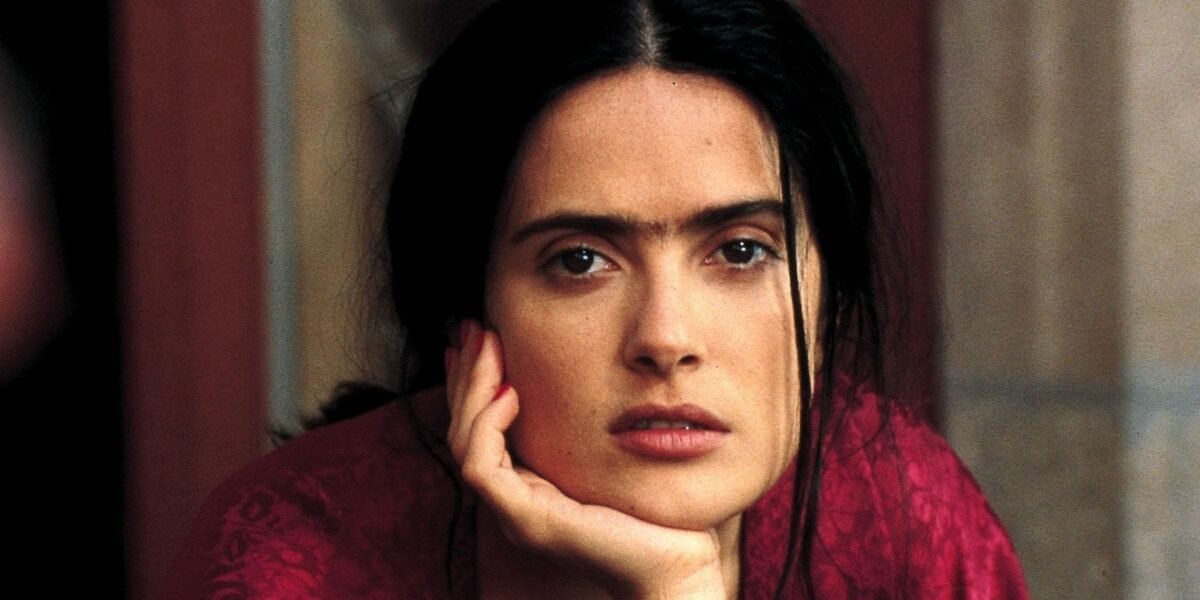
The world celebrates Salma Hayek’s biographical drama Frida as her greatest performance—the role that landed her an Oscar nomination and cemented her status as a global icon. But behind the stunning visual masterpiece was a story of pure Hollywood terror and abuse, orchestrated by producer Harvey Weinstein!
Hayek reportedly worked under “tremendous stress,” as the disgraced producer “constantly criticized the cast’s performances.” This was not an artistic collaboration; it was an environment of dictatorial control where Hayek, who was also the film’s driving force and primary organizer, had to perform perfectly to survive. Her ability to “absolutely nail” the role of the polarizing Mexican artist Frida Kahlo was a testament not just to her talent, but to her sheer, desperate will to push through the abuse and production setbacks to protect her passion project.
THE CULTURAL CONTRADICTION: Mexican Soul vs. American Cash
The central challenge of Frida was its need to appeal to both Mexican and American audiences—a high-wire act dictated by Weinstein’s financial demands. Hayek was tasked with constantly “straddling the line” between embracing Kahlo’s value to her native country and demonstrating her worth on a global, commercial scale.
This pressure forced Hayek to embody the artist’s contradictions: a self-professed leftist who “abhorred” capitalism and “criticized” Americans for their lack of sensibility, yet whose film had to be palatable for a Western audience. Hayek’s ability to seamlessly capture Kahlo’s revolutionary fire and intimate privacy while navigating Weinstein’s demands is why the performance is considered a masterpiece of precision and stealth.
THE SORDID TRUTH: Embracing The ‘Problematic’ Life
The film is celebrated for refusing to “aggressively sanitize the past,” instead embracing Kahlo’s every flaw, including her shocking sexual history. The film dives deep into her extramarital affairs with both men and women, including her act of revenge against her husband, Alfred Molina’s Diego Rivera, by seducing the couple’s housemaid, and later, Leon Trotsky.
Hayek’s performance was so potent because she “unerringly embraced her role’s most sordid moments.” The entire drama—the raw emotion, the gleeful smugness over infidelity, the heartfelt pain of miscarriage—was captured because Hayek’s “devotion to her subject matter” allowed her to reject the moralistic approach and portray Kahlo as a complex, messy, and often “problematic” figure.
THE HYPNOTIC ORIGINS: The Ugly And Grotesque
Despite her triumphant performance, Hayek had a shocking secret about her initial thoughts on Kahlo: she admitted she started with a “slight distaste for Kahlo’s work.” Per her own words, Hayek’s first impressions of the artist’s intensely personal art deemed it “ugly and grotesque.”
This revelation is a stunning example of a star pursuing a project purely through intellectual interest, not immediate passion. Her eventual devotion—which drove her to solely seek out the legal administrator to secure the rights—is a testament to her “organizing skills” and sheer determination. She chose to champion a controversial, polarizing figure, ultimately elevating a formerly underrated artist onto the global stage through sheer force of will.
THE POP CULTURE PROFANITY: The Kitsch Irony
The film’s legacy is tied to the massive commercialization of Frida Kahlo, who is now a pop culture icon whose face is printed on everything from “socks and slippers to handbags and pencil cases.” This is a profound irony, considering Kahlo was a fierce opponent of “capitalism and Western culture.”
Hayek’s performance captured the raw complexity of the artist, forcing audiences to “ask questions” and “ponder if the real Frida Kahlo would even support her modern place as a kitschy presence.” The film’s artistry lies in this uncritical examination, showing that even the most revolutionary figures can be commodified by the very system they abhorred.
THE CLIFFHANGER: What Did Weinstein Really Demand?
Salma Hayek’s Frida is celebrated as a monumental artistic and activist effort, but the most unsettling element is the suppression of the chaos surrounding its disgraced producer, Harvey Weinstein.
The final question is: Beyond the general criticism and pressure, what were the specific, unspoken demands Weinstein made of Hayek that she had to push through? Will a leaked production memo or a former crew member’s confession ever expose the full extent of the dictatorial control and abuse Hayek fought against to bring her passion project to life? We are betting the suppressed details of the set are far more horrifying than the beautiful film suggests.


