

MENTAL HEALTH BOMBSHELL: Gal Gadot Fearing Exposure As A ‘Fraud’
The image of the powerful, flawless Wonder Woman is shattered! Superstar Gal Gadot has just revealed she is locked in a private, debilitating mental health battle with Imposter Syndrome—a crippling psychological pattern that leaves her doubting her massive accomplishments and fearing she will be exposed as a “fraud.”
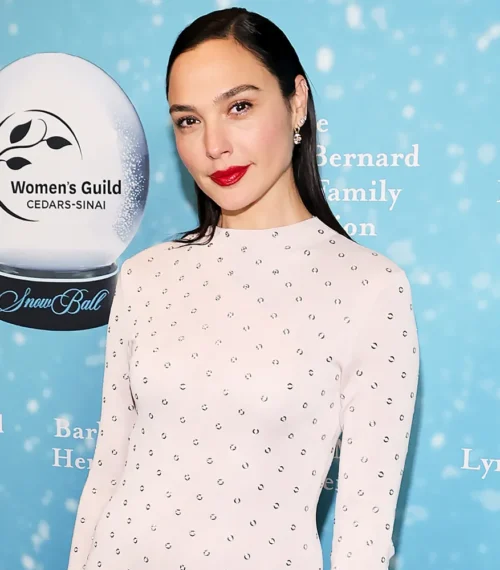
In a deeply candid interview with L’Officiel magazine, where she otherwise stunned in a bright, figure-hugging yellow dress, the -year-old Israeli actress confessed the shocking truth beneath the Hollywood exterior. “It’s funny, I always feel like I have this imposter syndrome,” she admitted.
The core of her anxiety is performance-related. She feels so “lucky” to do what she loves that she constantly questions her worth, stating: “I always feel like, ‘I hope they’re gonna like it.’ There’s never a moment when I’m like, ‘They’re gonna love this.’” This level of self-doubt in a star of her magnitude—who commands multi-million dollar paychecks—is staggering and shows the extreme, toxic pressure of superstardom.
THE COPPOLA CONFESSION: An Unlikely Ally In Hollywood
In her search for relief from this crushing insecurity, Gadot found an unexpected mentor: legendary Godfather trilogy director Francis Ford Coppola. This enlightening conversation became the actress’s “invaluable lesson in humility,” allowing her to embrace her own doubt.
Gadot recounted the director’s massive confession: “He said, ‘You know, something? I’m always filled with doubts. I’m always afraid they’re not going to like it. I just follow my heart and I come into it humble.‘”
If a titan like Coppola, who directed some of the most critically acclaimed films in history, is still plagued by these doubts, it suggests that the feeling of being a “fraud” is a toxic, secret disease that runs rampant even at the highest levels of Hollywood. Gadot is essentially revealing that the biggest stars are just as insecure as the rest of us—but hiding it better.
MOVING PAST PERFECTION: The Flawed Hero Strategy
Gadot’s debilitating condition is fueling her career pivot away from the flawless superhero persona. She is desperate to transition from the “perfect superhero” to portraying flawed, real people—a shift that might reflect her own emotional state.
Her upcoming film, Heart of Stone, which she is starring in and producing with her husband, is her attempt to embrace imperfection. She is playing a woman who is the antithesis of Diana Prince: “I wanted to create a woman who has learned to do everything by herself. She can never be an open book; she can never trust anybody fully.
The actress is intrigued by her character’s complexity and loneliness, a feeling that may mirror her own isolation at the top of Hollywood. She praised Heart of Stone director Tom Harper for crafting “character-driven narratives that emphasize emotional performances over mere action scenes.” Gadot is seeking emotional validation through her work, not just box office gold.
THE EVIL QUEEN PIVOT: Singing Her Way Out of Self-Doubt
Her next massive role—the villain in the upcoming Snow White adaptation—is another calculated move away from the heroic ideal. Gadot is utterly thrilled to play the Evil Queen, the “first evil villain in the history of Disney.”
She views the role as a form of creative therapy: “I get to sing and explore my theatrical, evil dark side.” This embrace of her negative, “evil” qualities on screen may be a direct way of managing her internal struggles with self-doubt and the fear of failure. It’s a high-stakes dramatic shift designed to shock the audience and revitalize her career.
The juxtaposition of the angelic beauty in the yellow dress with her admission of harboring a hidden “evil dark side” is a fascinating and disturbing portrait of a superstar navigating a mental health crisis.
HUSBAND’S ROLE: The Business Brain and The Safety Net
In this chaotic environment of self-doubt and relentless work, Gadot’s husband, Jaron Varsano, serves as her indispensable safety net and business mind. The couple’s decision to merge their personal and professional lives—with Varsano handling the financial side of Pilot Wave Productions—is clearly a crucial support system for the actress.
Gadot gushed: “Jaron has the business mind, and who else can take care of my interests better than my life partner.” This total reliance on her husband ensures that even when she’s consumed by self-doubt and focusing on complex emotional roles, her multi-million dollar empire is protected by the person she trusts most.
However, this reliance also means that if Heart of Stone—the project he is managing—fails, the disappointment will hit both her creative soul and her marital bond. The pressure on Varsano to deliver is immense.
THE CLIFFHANGER: Can Gadot Outrun The ‘Fraud’ Fear?
Gal Gadot is fighting her crippling Imposter Syndrome by taking on the most complex, challenging roles of her career—a flawed spy and the Evil Queen. She has the advice of a legend and the support of her business-minded husband, but the core anxiety remains: she fears she will be exposed as a fraud.
She is eagerly anticipating the audience’s response to Heart of Stone, a moment that will either validate her confidence or send her deeper into self-doubt. The ultimate question is: Can Gal Gadot, the real person, ever fully embrace her success, or is the fear of failure a permanent, debilitating shadow over her career?
The world is waiting to see if her vulnerability becomes her undoing.

The figure-hugging dress that concealed her trauma.

The psychological pattern that haunts her.

The legendary director who comforted her.

Her husband and business partner.

Her belief in universal female stories.

Embracing her dark side in Snow White.

The director focused on emotional performances.

The glamorous facade she maintains.

The complex, flawed character she is playing.

Navigating the labyrinth of Hollywood.

The great shift in her career.

The star’s heritage.

Her husband’s protective role.

The role that gave her confidence.

The projects she’s eagerly anticipating.

The source of her candidness.

The humility she learned to embrace.

Her desire to play a flawed character.

Rachel Stone’s inability to trust.

Prioritizing emotion over action.