













The Tragic Decline of a Rock God: -Hour Care Reality
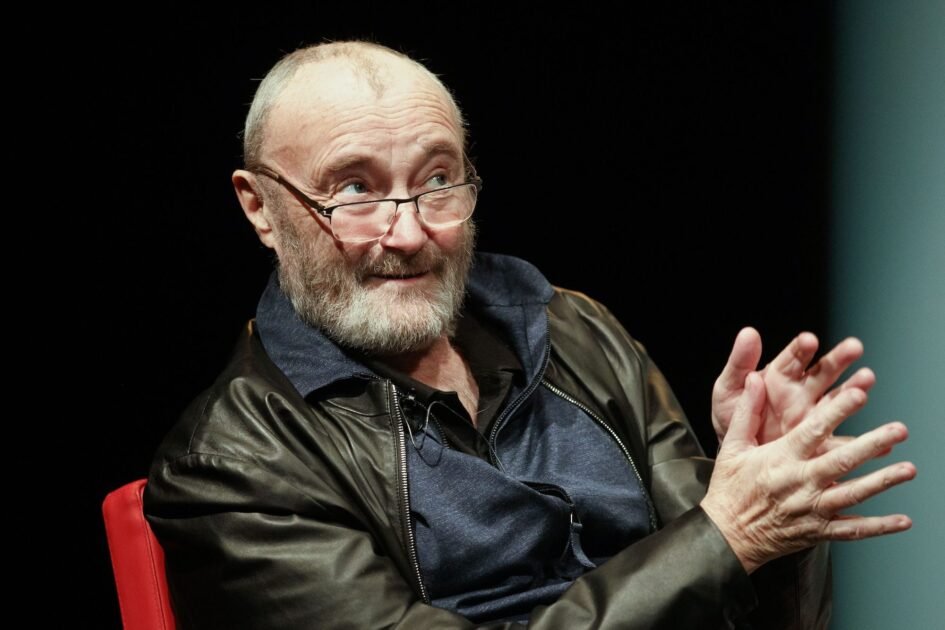
The facade has finally cracked, and the truth about Phil Collins and his rapidly deteriorating condition is far worse than anyone imagined. For years, fans have watched the Genesis frontman wither away on stage, performing from a chair while looking frail and ghostly. Now, in a shocking confession that has sent tremors through the music industry, the -year-old icon has admitted that his independence is gone. He is now living under the supervision of a -hour live-in nurse just to survive his daily routine.
In a raw and possibly final interview with the BBC, Collins stripped away the PR spin that has protected his image for the last decade. He revealed that his life has become a cycle of medication and management, overseen by hired help who ensure he doesn’t miss a pill. “You know, I have a -hour live-in nurse to make sure I take my medication as I should do,” Collins admitted. This isn’t just about aging gracefully; this is a total surrender of autonomy.
Sources close to the situation suggest the “medication” regimen is complex and critical, hinting at underlying issues that go far beyond a bad back. The image of the man who once dominated global stadiums now needing a babysitter for his pills is a brutal wake-up call. While his daughter Lily Collins shines on red carpets for Emily in Paris, her father is fighting a much darker battle behind closed doors at his estate.
“Seeing Phil like this destroys me. A -hour nurse? That sounds like end-of-life care, not just recovery. Why did nobody tell us it was this bad?”
The admission comes after what Collins describes as a “frustrating last few years,” a massive understatement for a man whose body seems to be betraying him piece by piece. He told the interviewer, “I had everything that could go wrong with me, did go wrong with me.” That is a terrifying quote from a man with unlimited resources and access to the best doctors in the world. When money can’t fix you, you know the situation is dire.
The Secret Boozing Binge That Left Him Hospitalized
For years, the narrative was that Phil Collins was just suffering from “nerve damage” due to drumming. But now, the dark truth about his lifestyle has come pouring out. In a moment of startling honesty, Collins confessed that a secret spiral into heavy drinking played a massive role in his recent health collapse. He admitted to “day-drinking” and losing control after coming off the road, a habit that landed him in the hospital for months.
“I enjoyed coming off tour… I thought, right, I’m gonna do all those things that I couldn’t do,” Collins confessed. But that freedom quickly turned into a nightmare. He admitted he was drinking heavily, cutting himself off at p.m. to pretend he had control, but the damage was being done in real-time. “I guess I had too much of it,” he said. “I was never drunk, although I fell over a couple of times.”
“Fell over a couple of times.” Let’s read between the lines here. For a man with severe spinal issues and mobility problems, “falling over” is a catastrophe. It suggests a level of impairment that put his life at risk repeatedly. This wasn’t just a glass of wine with dinner; this was a coping mechanism gone wrong. The consequences were severe: “It all caught up with me, and I spent months in hospital.”
Months? That is a massive chunk of time to disappear. While reps were likely issuing vague statements about “routine procedures,” Collins was actually bedridden, paying the price for his post-tour bender. He is now celebrating two years of sobriety, but the toll it took on his kidneys and his already fragile body might be irreversible. The “In the Air Tonight” singer was drowning, and nobody knew the full extent of it until now.
Five Knee Surgeries: A Body Held Together by Threads
If the internal organ failure wasn’t enough, Collins’ skeletal structure is essentially collapsing. He revealed he has now undergone a staggering five knee surgeries. This confirms that the man is in constant, agonizing pain. He described having “one leg that works,” a harrowing admission for a performer who used to run across stages worldwide.
“I can walk, albeit with assistance, you know, crutches or whatever,” he mumbled. But let’s look at the paparazzi photos from the last few years—he is rarely seen walking at all. He is almost exclusively seen in wheelchairs or seated. The “crutches” comment feels like a desperate attempt to cling to some dignity, but the reality is that his mobility is shot. The wear and tear of decades of drumming hasn’t just hurt his hands; it has destroyed his foundation.
Insiders whisper that the repeated surgeries haven’t provided the relief he hoped for. Five surgeries on one area suggest complications, infections, or failures in the healing process. When you combine that with his spinal issues—which date back to a tour injury—you have a man who is likely trapped in a prison of his own physical limitations. The “assistance” he mentions is likely far more substantial than just a pair of wooden sticks.
Nerve Damage and The Death of The Drummer
The tragedy of Phil Collins is the cruel irony of his specific ailments. The man is a drumming genius, yet he physically cannot hold the sticks anymore. This isn’t news, but the way he speaks about it now is final. It is the resignation of a man who knows the fight is over. In the new interview, he reiterated that his hands simply don’t work the way they need to.
After a operation to fix nerve issues, he regained some sensation but lost the dexterity that made him a legend. During the last Genesis tour, he had to watch his son, Nic Collins, take the throne. While he plays the proud father, sources say it eats him alive that he can’t join in. “If I can’t do what I did as well as I did it, I’d rather relax and not do anything,” he conceded.

He admits it is “still kind of sinking in.” Imagine that. Years after retiring, the shock of his disability still haunts him. “I’ve spent all my life playing drums. To be suddenly not be able to do, that is a shock.” This isn’t just a physical issue; it is an identity crisis. Without the drums, who is Phil Collins? He seems to be struggling to answer that question as he sits in his home, surrounded by nurses instead of bandmates.
Hospice Rumors vs. The PR Spin Machine
We have to address the elephant in the room. Back in July , the internet was ablaze with rumors that Collins had entered hospice care. The chatter was deafening. At the time, his rep came out swinging, denying the claims and insisting he was just recovering from a “minor” procedure. But looking at the facts now—the -hour nurse, the months in the hospital, the kidney failure, the inability to walk—was the “hospice” rumor really that far off?
Hollywood PR teams are masters of semantics. “Live-in -hour nursing care” sounds an awful lot like the kind of support one receives in very serious, end-stage scenarios. While he might not be in a designated hospice facility, the level of care he is describing is intense. The denial in July feels like damage control to prevent a stock market crash on his back catalog. Now that he is admitting the severity of his condition himself, the PR spin looks thin.
“They told us he was fine! Just a ‘procedure.’ Now he has a full-time nurse? I don’t trust these reps. Phil is in bad shape and they are trying to hide it.”
The gap between “he’s fine” and “he has a live-in nurse to make sure he takes his pills” is a canyon. Fans are right to be suspicious. When a star of this magnitude starts talking about their health in the past tense—”everything that could go wrong did”—it usually signals that they are preparing the public for the inevitable.
The Final Curtain: “I’ve Used Up My Air Miles”
Perhaps the most chilling part of this new revelation is Collins’ total lack of fight. In previous years, there was always talk of “maybe” returning to the studio. Now? He is shutting it down. He confessed to MOJO Magazine that he is “not hungry for it anymore.” He even admitted he struggles to motivate himself to go downstairs to his own home studio.
“I just feel like I’ve used up my air miles,” he said. That is a heavy, final statement. It sounds like a goodbye. It sounds like a man who has looked at the road ahead and decided he doesn’t want to travel it. The th birthday celebration commissioned by the BBC feels less like a party and more like a eulogy while he is still here to hear it.
With his daughter Lily finding massive success and his son Nic carrying on the drumming legacy, Phil seems to be settling into a quiet, painful retirement. But the question remains: how much time does he have left? The rapid decline, the secret hospitalizations, and the need for constant supervision paint a bleak picture.
As we approach his birthday on January , the music world is holding its breath. Is this interview the final sign-off from a legend who knows the clock is ticking? We hope not, but the silence from his camp—outside of these heartbreaking admissions—is deafening.