











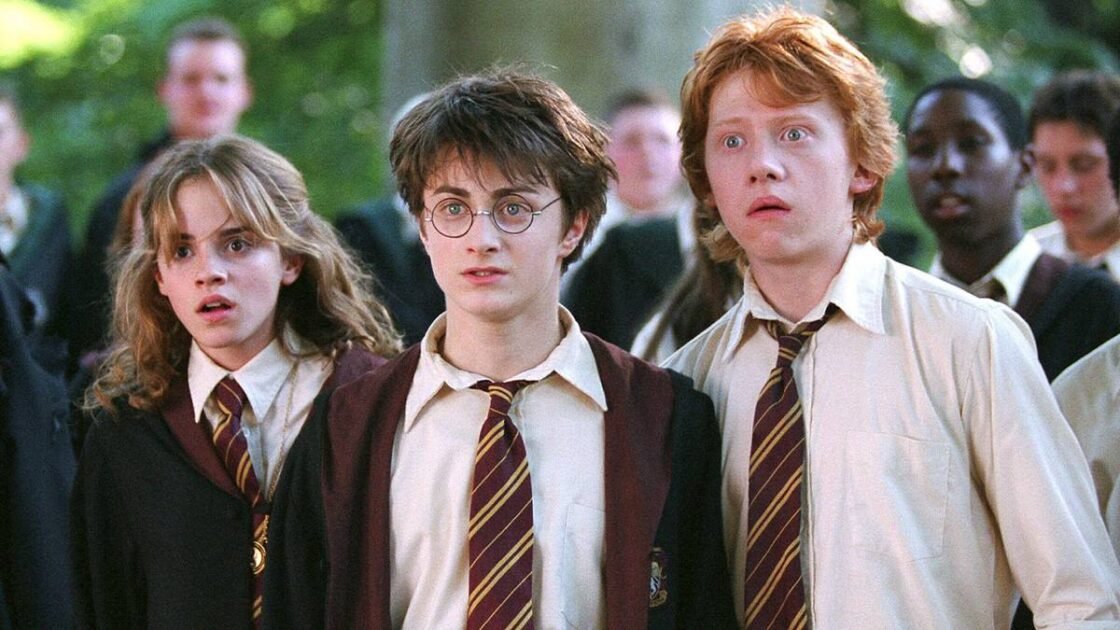

Harry Potter and the Prisoner of Azkaban (2004) is regarded as one of the best films in the franchise, and for good reason. The film, directed by Alfonso Cuarón, marks an obvious tonal shift from the first two installments as the Golden Trio navigates the beginning of their teenage years. The Harry Potter world feels more lived-in, and the stakes are higher than ever with Dementors patrolling school grounds.
The performances hit harder, the magic is more layered, and the writing explores morally grey territories that would go on to define future Harry Potter films. In many ways, the third film in the series marks the beginning of a darker era for the wizarding world. However, all of that doesn’t distract from the fact that Harry Potter and the Prisoner of Azkaban features several glaring plot holes and inexcusable mistakes. Here are 7 things wrong with what is widely considered the greatest Harry Potter movie of all time.
7 No Depth to the Marauders’ Backstory
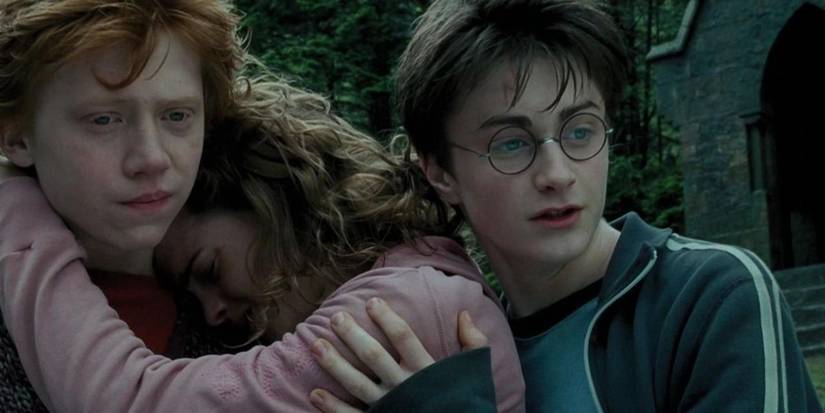
Hermione hugs Ron and cries while Harry stands close to them in Harry Potter and the Prisoner of Azkaban.
Harry Potter and the Prisoner of Azkaban does an extreme injustice to its novel counterpart because of how it treats the Marauders’ lore. This lack of context is one of the film’s biggest missed opportunities because it never really dives deep into the Marauders’ friendship and the role they played in the first Wizarding War. Sure, the iconic Marauder’s map is a huge part of the film’s narrative, but the history behind it is lost along the way. J.K. Rowling actually dedicates an entire chapter titled “Moony, Wormtail, Padfoot, and Prongs” to unpack how James, Sirius, Remus, and Peter met and why they turned into Animagi illegally. Some might say that the backstory would have been filler content, but it’s actually a deeply emotional arc that completely reframes everything Harry knows and believes in.
The payoff of the film’s third arc comes off as weak since we never get to know who the Marauders were as people. The film doesn’t explain how James would become a stag to accompany Remus during his transformations, so when Harry looks at the Patronus by the lake and whispers, “Dad,” movie-only audiences are obviously left confused. Not to mention that doing so reduced the Marauders to one-dimensional stereotypes, while the book focused on showing them as four imperfect students who broke rules and played mean pranks, but grew up to become thoughtful adults who accepted the consequences of their choices. This is what makes Peter’s ultimate betrayal so devastating in the books and completely explains Sirius and Remus’s frustration that has been pent up for years. The film makes this central conflict feel oddly rushed and surface-level, and that does no justice to what their journey is really about.
6 Sirius Black’s Redemption Is Abrupt
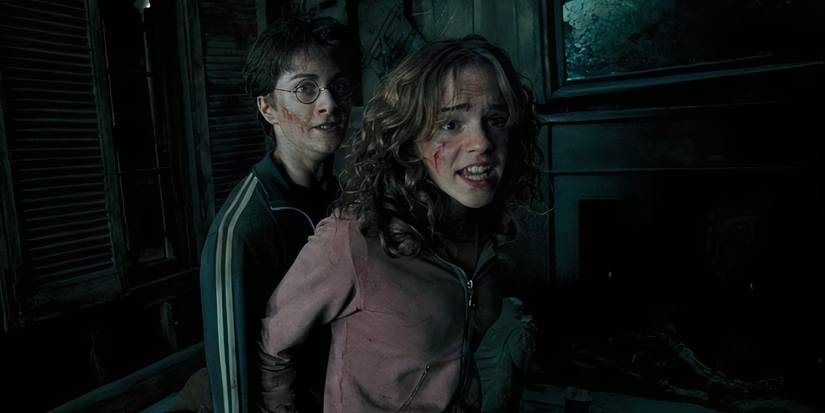
Hermione (Emma Watson) stands between Harry (Daniel Radcliffe) and Sirius Black (Gary Oldman) in 'Harry Potter and the Prisoner of Azkaban'
This one is partly because the film lacks a Marauders’ backstory, but also because the writers completely forgot to focus on Sirius Black’s character development. The book spends a lot of time exploring Sirius’s mental state after he escapes Azkaban. We get to see how years behind bars in the Dementor-filled prison completely broke him as a person. Gary Oldman’s take on Sirius in the films nods to this, but it doesn’t fully explore how close the character came to losing his sanity. This makes Sirius’s shift from a psychopath on the run to a warm, fatherly figure for Harry (Daniel Radcliffe) feel jarring.
The movie gives us almost no insight into Sirius’s trauma, and Harry gets almost no time to question the sudden revelation of his innocence. Within minutes, you have Ron (Rupert Grint) screaming about how Sirius wants to murder Harry before everyone switches gears and tries to protect him. The real problem is how the movie overlooks Sirius’s character arc and how deep his bond with James (Adrian Rawlins) really was. This ultimately leads to Harry and Sirius’s relationship feeling half-baked since Harry magically accepts everything and even agrees to move in with him almost immediately. What should have been the complicated beginning of one of the franchise’s most meaningful relationships just feels underwhelming, and that destroys everything that made Sirius’s character a fan-favorite in the book.
5 Plot Holes in the Time-Turner Logic
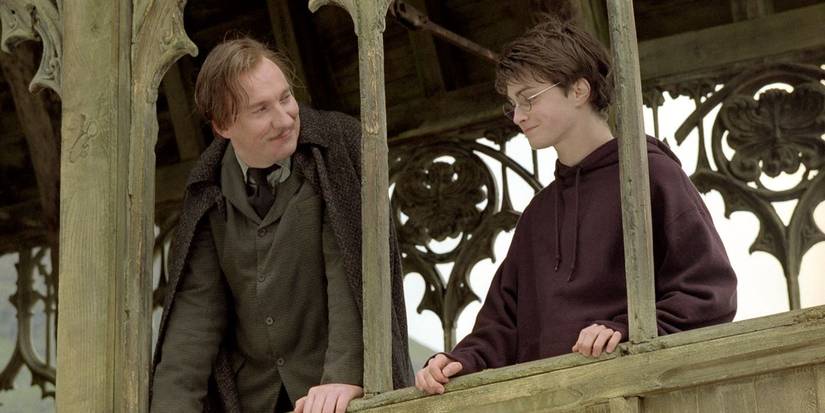
David Thewlis and Daniel Radcliffe in 'Harry Potter and the Prisoner of Azkaban'
The Time-Turner is one of the coolest magical objects introduced in Harry Potter and the Prisoner of Azkaban. It practically defines the entire narrative of the book and the film, and is an ambitious plot device. However, it also defies all magical logic in the Harry Potter universe, which just isn’t worth it. For starters, you have to wonder why a device this powerful is given to a 13-year-old of all people, and that too, so she can attend more classes. Toward the end of the film, Dumbledore (Michael Gambon) tells Harry and Hermione (Emma Watson) that even the smallest misuse of the Time-Turner can cause catastrophic consequences. The object can alter entire timelines, and giving it to Hermione so she could take two classes at once just doesn’t make sense. The time-traveling itself is confusing because it creates a self-fulfilling loop, but the film doesn’t spend any time explaining the mechanics of it.
We see Harry saving himself with the Patronus he thought belonged to his father, but it is revealed that he was the one conjuring it all along. Then again, the logic starts to fall apart right there since in Harry’s original timeline, Buckbeak is executed. The movie treats the Patronus as a fixed event, while everything else can be altered. Not to mention that the rule of time travel is to avoid being seen by your past selves. However, Hermione throws a rock at her old self to get her to leave Hagrid’s (Robbie Coltrane) hut, which technically counts as her interfering with the timeline. The film never reconciles these contradictions. which is fine for younger viewers, but definitely questionable with an older audience. The time travel sequences in the film are visually brilliant, and the looping is a clever creative choice, but all of that falls apart instantly, given all the plot holes they lead to.
4 Harry Using Magic Outside of Hogwarts

Daniel Radcliffe as Harry performs the spell Expecto Patronum in Harry Potter and the Prisoner of Azkaban.
The cardinal rule of the Harry Potter book series is that underage wizards aren’t allowed to use magic outside of Hogwarts. The film franchise completely disregards this rule in several films, including the completely unnecessary cold open in Harry Potter and the Prisoner of Azkaban. The film begins with Harry in his bedroom at the Dursleys as he secretly practices the illuminating spell Lumos Maxima under his covers. For starters, the scene doesn’t exist in the books at all, and it does absolutely nothing to drive the plot forward.
Secondly, Harry knows that the Ministry of Magic can detect when underage wizards perform magic because he already received a warning in Harry Potter and the Chamber of Secrets when Dobby used the Hover charm near him. This leads book Harry to be extremely paranoid about doing anything magical at Privet Drive. However, in the movies, Harry is just casually working on his charms in the Muggle world. The scene doesn’t sit well with any fans of the Harry Potter series and only serves as entertainment for viewers who have no context on how strict the rule is actually supposed to be.
3 Peter Pettigrew and the Marauders' Map
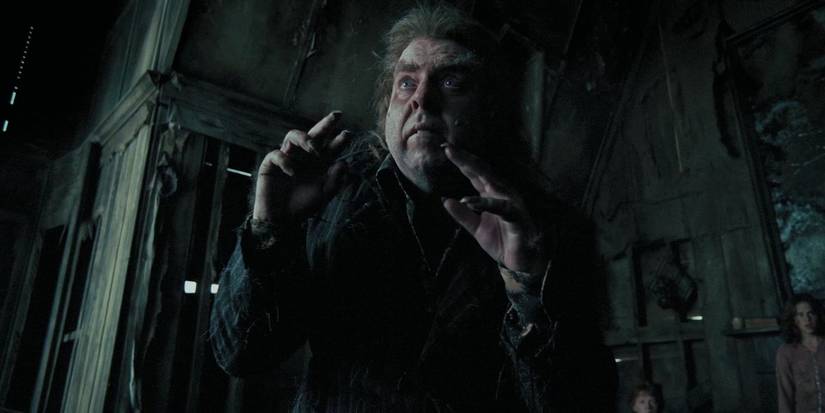
Peter Pettigrew (Timothy Spall) with his hands up and looking concerned in Harry Potter and the Prisoner of Azkaban
Another plot hole in Harry Potter & The Prisoner of Azkaban is Peter Pettigrew (Timothy Spall) showing up on the Marauder’s Map. Now, in the book, Harry never sees Wormtail on the map, but the film opens up a giant can of worms in doing so. If Harry can see Peter on the map, it would only make sense for Fred (James Phelps) and George (Oliver Phelps) to have noticed it in all their years of owning the map. The twins brag about knowing everything the map has to show, and if that is the case, they should have seen the name of a grown man sleeping in their younger brother’s dorm every night. Some might defend this logic by saying that the twins wouldn’t have recognized the name Peter Pettigrew, but given that he is famous in the wizarding world for being the man Sirius murdered, the theory doesn’t really stand.
The film also fails to explain why Wormtail suddenly shows up when Harry is using the map, because from what we know, he hasn’t gone back to his human form since staging that murder and cutting his own finger off. However, what’s worse than all of that is when Harry hands the map over to Lupin and tells him about seeing Pettigrew on it. Obviously, the audience eventually finds out that this is what alerts Lupin and sends him to the Shrieking Shack to save Sirius. Still, the fact that he does nothing in the moment is weirdly irresponsible. The Defense Against the Dark Arts professor could have warned Dumbledore or gone to the Ministry, but for some strange reason, he chose to wait it all out, and that feels so out of character for someone so careful and responsible.
2 Lupin Not Taking His Potion
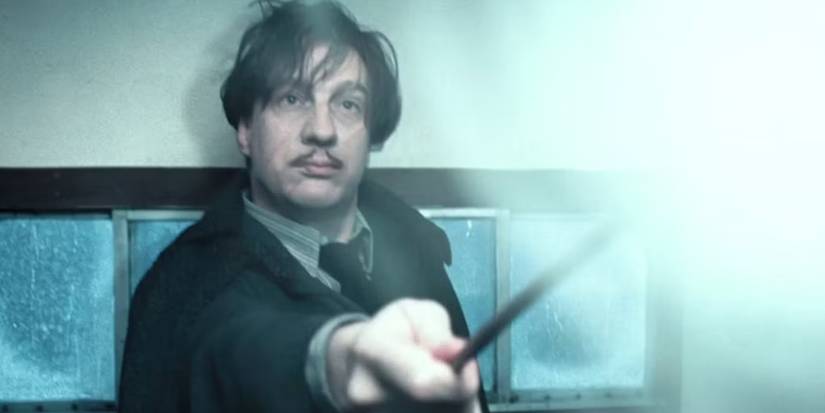
Remus Lupin (David Thewlis) summoning a patronus on the Hogwarts Express in Harry Potter and the Prisoner of Azkaban
Speaking of Remus, another questionable thing he does in the film is forgetting to take his Wolfsbane Potion on time. The moment makes sense in the books, since the Marauder is distracted by seeing Harry, Hermione, and Ron confront Sirius at the Shrieking Shack on the map. However, the film offers no such explanation and treats the whole thing as a convenient plot device to orchestrate Wormtail’s escape.
Not just that, but the logic of Lupin’s transformation also doesn’t make sense. He only starts to turn into his wolf form once a patch of clouds drifts aside and the moonlight physically hits him. This implies that the Hogwarts professor could have somehow delayed his transformation by simply avoiding moonlight.
1 The Awkward Ending Shot
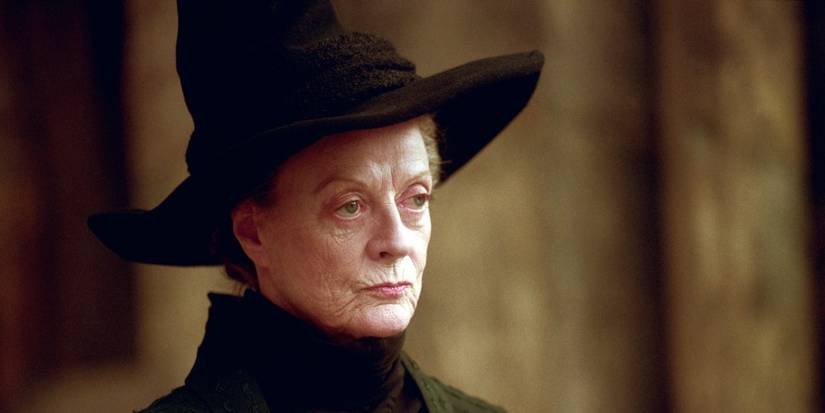
Maggie Smith in Harry Potter and the Prisoner of Azkaban
Out of all the things that Harry Potter and the Prisoner of Azkaban got wrong, this might feel like a minimal issue. However, that’s not the case when you consider the backstory. What makes the third installment in the film franchise so memorable is how serious the stakes feel compared to its predecessors. After Wormtail escapes, you know that Professor Trelawney’s (Emma Thompson) prediction about Voldemort (Ralph Fiennes) is bound to come true. However, after all that suspense, the film ends with Harry receiving a Firebolt from Sirius, along with one of Buckbeak’s feathers, so we know it’s safe. Harry then hops onto his new broom and takes off. The closing image is a frozen frame of the main character with his eyes wide and mouth open. This weirdly comic scene is tonally jarring, given the hard-hitting climax and a sense of impending doom with Voldemort and Wormtail being reunited.
The strange visual stretch effect on Harry’s face mimics the Dementor’s kiss, which makes the sequence all the more questionable. Not to mention that the book’s handling of the Firebolt story feels a lot stronger than how it is portrayed in the film. Rowling’s series features Harry receiving the broom around Christmas after his trusty Nimbus 2000 is destroyed in a Quidditch match. This sends all of Hogwarts into a frenzy because everyone believes Sirius Black is trying to kill Harry by putting a hex on the broom. Professor McGonagall (Maggie Smith) confiscates the Firebolt and examines it for jinxes, and Harry doesn’t get it back until months later. The film trades this tension-filled subplot for a light-hearted moment, which could have worked if it didn’t give the viewers emotional whiplash.