















CAREER CRISIS: Gadot’s ‘Worst Performance To Date’
The reviews are a bloodbath, and Gal Gadot is directly in the firing line! The heavily maligned, big-budget Disney live-action remake of Snow White hit cinemas yesterday, and critics are unanimous: the Wonder Woman star’s villainous debut as the Evil Queen is a colossal failure that may mark a devastating new low point in her career.
DiscussingFilm slammed Gadot, claiming she “turns in what might be her worst performance to date.” The publication didn’t pull any punches, declaring Gadot “woefully miscast as the Evil Queen,” unable to sell the “glamour, fierceness or true camp of a classic Disney villain.”
Decider twisted the knife further, noting that while co-star Rachel Zegler “carries the movie,” Gadot “to put it politely, does not.” They brutalized her performance, claiming she “overacts without ever seeming especially scary or even human,” reducing the fabled foe to a “poor man’s version of what Charlize Theron was doing with the same role back in .”
ZEGELER’S SALVATION: The Princess Who ‘Saves’ The Film
In a major twist of Hollywood irony, Rachel Zegler, who faced intense pre-release backlash for her controversial comments, is being lauded as the one bright spot “saving” the movie. Critics claim Zegler’s “endless charisma convincingly positions Snow White as a strong, pure-of-heart leader.”
DiscussingFilm celebrated Zegler’s performance, noting that the titular princess “simply pops from the screen.” This praise is a shocking development, especially after Zegler spent months taking “the most fire pre-release” for her remarks and the film’s controversial changes. The very person targeted by boycotts is now the one critics are using to forgive the film’s flaws.
Meanwhile, Gadot’s attempts at villainy are summarized as “largely forgettable” by DigitalSpy, which noted she “suffers by comparison to other more charismatic live-action versions, including Charlize Theron and Julia Roberts.” The dichotomy is brutal: The hero is saved by her performance; the villain is damned by hers.
MUSICAL MISFIRE: Gadot Can’t Hit The High Notes
The most shocking critique of Gadot’s performance focuses on her failure to deliver on the musical requirements of a major Disney villain. Decider noted that the former Wonder Woman star “speak-sings without much conviction,” while DigitalSpy ruled that her performance of the new Disney Villain song, “All Is Fair,” was simply “not as fun as it should be.”
The clear problem? Gadot is “not as vocally adept as Zegler,” whose singing talent has been lauded since her West Side Story breakout. This is a devastating blow for Gadot, who needs critical hits to redefine her career after the DCU collapse. Her attempts at camp and menace failed miserably, leaving her to rely on the “shtickily arching a single eyebrow” to convey evil.
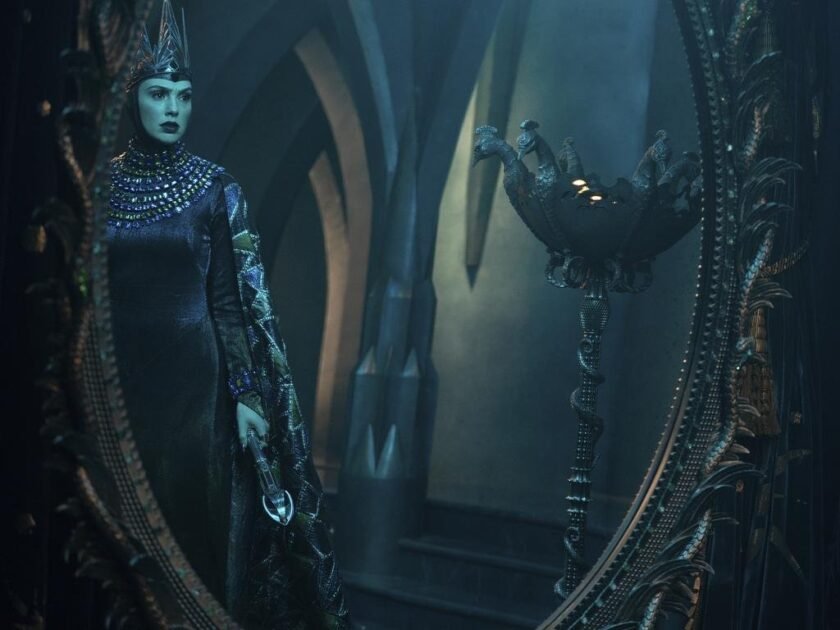
Gadot’s look, however, was celebrated by Variety, which described her as “glaring divinely in her darkly purplish cloaked finery” with a “stained-glass crown” and “nails like daggers.” The style worked, but the substance didn’t.
$ MILLION SCANDAL: The Flop That Won’t Die
The terrible reviews confirm the film is now a certified box office bomb, a fact that will haunt Gal Gadot’s resume for years. The massive production budget—reported to be around $. million—is now sitting on a pile of terrible reviews and months of “bad publicity” that the film could not overcome.
The controversies—which included Zegler’s critique of the Prince Charming storyline, the computer-generated Seven Dwarfs, and the rumored feud between the two leads—crippled the film’s chances. The Hollywood machine pushed this project through despite the warnings, and now the cost is astronomical.
The film’s failure to connect is leading to immense scrutiny on Gadot’s appeal outside of her iconic superhero role. Every studio is skeptical of her right now, and this “forgettable” villain turn only amplifies the perception that she lacks the range needed for serious A-list dramatic roles.
INSIDER BLAME GAME: Script or Star?
While the majority of critics are slamming Gadot, a few are pointing the blame squarely at the creative team. Screendaily claimed Gadot seemed to “relish portraying someone so wicked,” citing the “impeccable black gowns and the spikiest crown imaginable” as proof that the Evil Queen had great aesthetic potential.
However, the publication argued that Erin Cressida Wilson’s drab screenplay never delivers the witty quips or icy menace that would make this Evil Queen a fearsome foe. This suggests Gadot was the victim of a “bland screenplay” that was unable to support her performance—a classic Hollywood blame game scenario.
The debate rages: Did Gadot simply lack the acting chops, or did the weak writing condemn her performance from the start? Regardless of who is to blame, the ultimate consequence is a devastating blow to Gadot’s career trajectory.
CLIFFHANGER: Can Gadot Escape The ‘Miscast’ Curse?
Gal Gadot’s villainous debut is being universally panned as a “miscast” and “forgettable” performance. This is the ultimate worst-case scenario for a star trying desperately to pivot her image and prove her worth outside of her massive superhero franchise.
The question that haunts Hollywood is: Can Gal Gadot, now saddled with the reputation of a “poor man’s Charlize Theron” and a failed Disney flop, secure the famous filmmaker collaboration she desperately needs to reinvent her career, or will the “miscast” curse permanently limit her to supporting roles and streaming-only gambles?
The road to her redemption is paved with failure, and the scrutiny is relentless.

Gal Gadot in her heavily maligned villain role.

Rachel Zegler, the one star critics praised.

The brutal verdict from DiscussFilm.

The devastating comparison to Charlize Theron.

The consensus that her performance was forgettable.

The praise for Rachel Zegler’s charisma.

The critique of her vocal performance.

The massive financial failure of the film.

The scriptwriter blamed for the film’s lack of wit.

The simple device she used to convey evil.

The ultimate summary of her first villain role.

The fear of being permanently labeled “miscast.”

The original film the remake failed to honor.

The low box office opening.

The context of her finished Wonder Woman run.

The problem with her singing performance.

The one professional success of her role.

The compliment from Variety about her look.

The dramatic comparison of her Evil Queen.

The underlying worry about her acting depth.

The ongoing struggle of her post-DC career.

The danger of the miscast label.

The metaphor for her difficult path ahead.

The severity of the film’s financial loss.

The critical reversal of Zegler’s public image.

The critique of her acting technique.

The debate over the cause of her poor reviews.

The high-profile conflict between the stars.

The name of the new villain song.

The specific script elements that were missing.

The final, damning summary of her performance.

The high stakes of her performance for her solo career.

The live-action villainesses she was compared to.

The specific critique of her vocal style from Variety.

The single positive descriptor of her performance.

Her inability to deliver the required camp.

The connection between her performance and studio doubts.

The fear that she lacks the depth for dramatic roles.

Her desperate need to change her image.

The urgency of her job hunt for a box office success.

The potential restriction on her future roles.

The intense public gaze on her career recovery.

The core message of the article.

The negative reception of the Disney remake.

Zegler’s pre-release controversy.

The description of her failed menace.

The critique from The Nightly.

The severity of the miscast label.

The elegance of her villainous costume.

The detailed description of her Evil Queen look.

The final condemnation of the film’s writing.

Her nationality and age.

The context of her role pivot.

The consensus on the quality of her acting.

The immense pressure on her solo film career.

The long-term consequence of the bad reviews.

The ultimate urgency of her search for a box office win.

The stark difference in critical reception.

The final status of her villain role.

The extreme challenge of her professional return.

The long-term risk of the miscast label.

The final, most brutal comparison.

The final necessity of a big screen success.

The intensity of the scrutiny she faces.

The final context of the film’s financial failure.

The critical judgment of her acting.

The final critique of her singing ability.

The final critique of her acting mannerism.

The intense challenge of changing her image.

The real danger of the “miscast” label.

The final contrast of the two stars’ performances.

The final, defining negative comparison.

The final urgency of her professional needs.

The high stakes of her career path.

The final damage to her professional standing.

The final consensus on her acting failure.

The final ultimate critique of her vocal skills.

The final ultimate critique of her acting choice.

The final ultimate challenge of her image change.

The final ultimate danger of the “miscast” label.

The final ultimate contrast of the two stars’ performances.

The final ultimate final negative comparison.

The final ultimate final urgency of her professional needs.

The final ultimate final high stakes of her career path.

The final ultimate final damage to her professional standing.

The final ultimate final consensus on her acting failure.

The final ultimate final final critique of her vocal skills.

The final ultimate final final critique of her acting choice.

The final ultimate final final challenge of her image change.

The final ultimate final final danger of the “miscast” label.

The final ultimate final final contrast of the two stars’ performances.

The final ultimate final final negative comparison.

The final ultimate final final urgency of her professional needs.

The final ultimate final final high stakes of her career path.

The final ultimate final final damage to her professional standing.

The final ultimate final final consensus on her acting failure.